
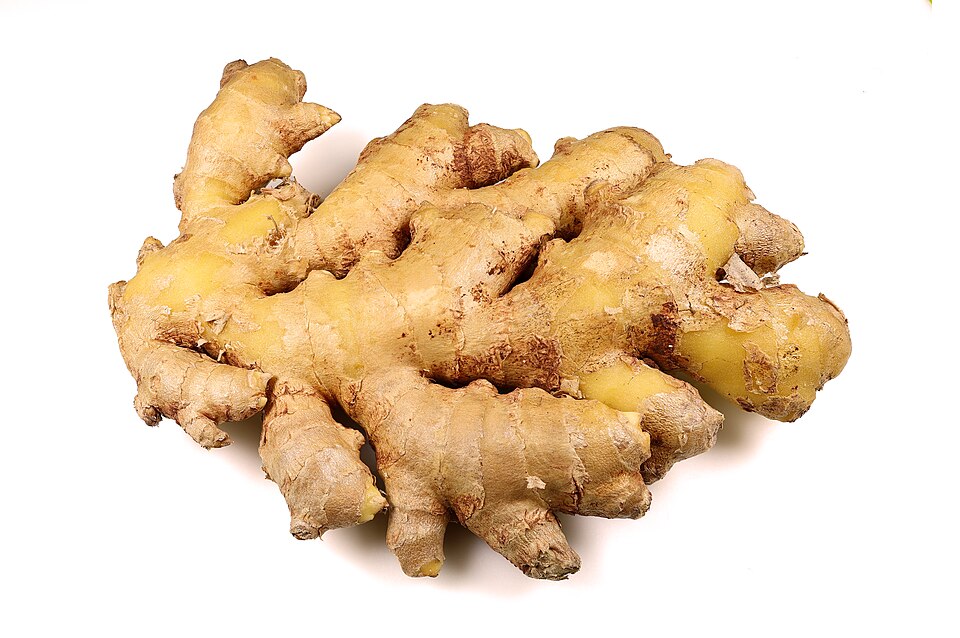
Ginger
Zingiber officinale
Ginger is a tropical plant native to the warm parts of Asia.
⚠ Dangerous look-alikes
Photo: Sanjay Acharya, CC BY-SA 4.0, via Wikimedia Commons

Herb profile · Garden herb
Mentha × piperita
Also called peppermint, peppermint oil, peppermint leaf
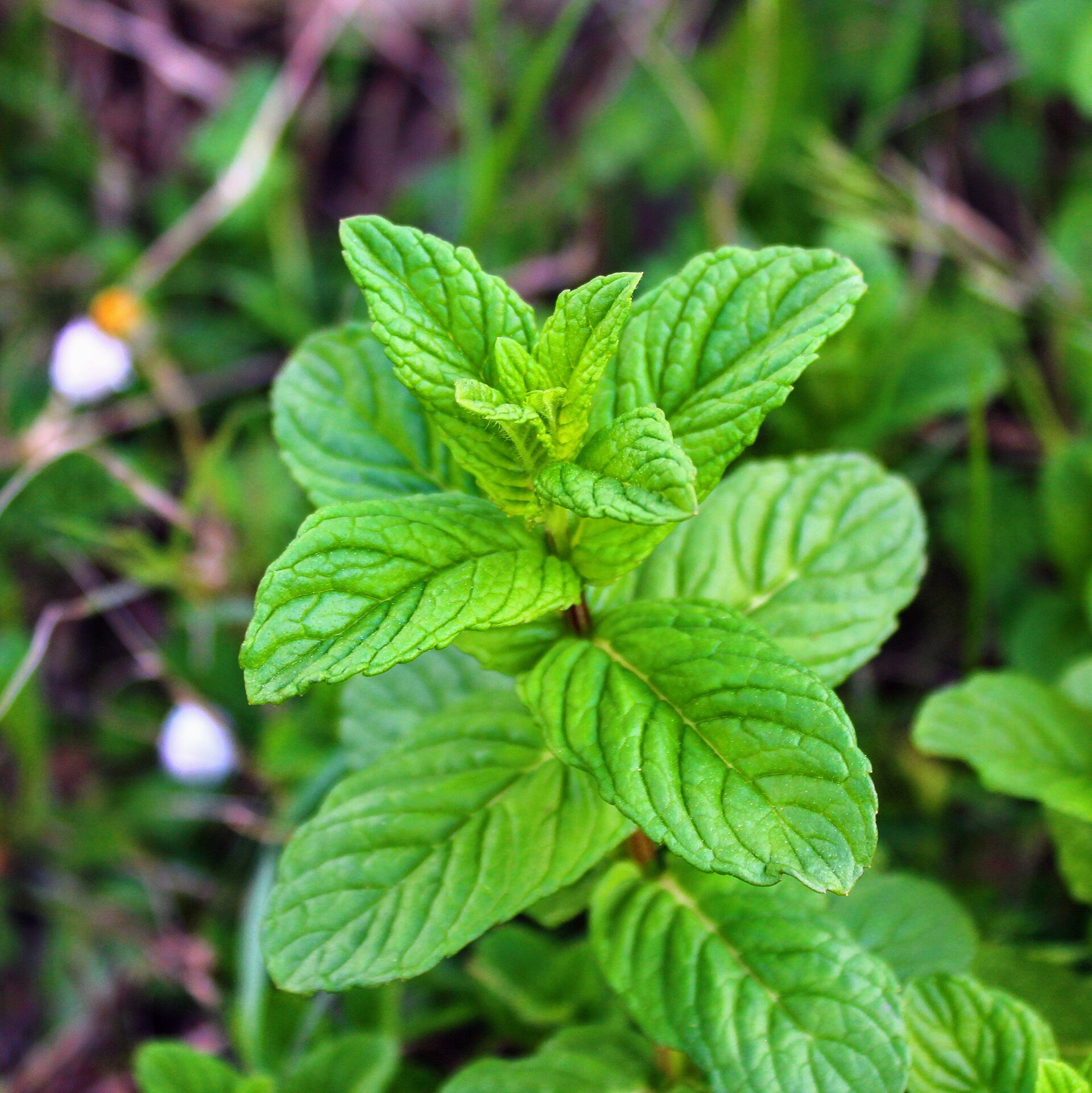
Peppermint is a hardy, spreading perennial with square stems, toothed leaves, and a cool menthol scent. It grows throughout Europe, North America, and the Mediterranean [1]. It's one of the easiest herbs to grow, so easy that it can take over a garden bed [4].
It's important to know that peppermint leaf (tea) and peppermint oil are very different products. Most of the research is on the essential oil, especially enteric-coated capsules for irritable bowel syndrome (IBS). There, the evidence is better than for most herbs, though still not high quality. Very little research has been done on peppermint leaf tea [1][5].
Specimen · Lamiaceae
This section describes how people have used peppermint historically. It does not show that these uses work. See the next section for the evidence.
Bottom line: there is moderate support for peppermint oil capsules for IBS, though the research quality is low. For everything else the evidence is limited or missing, and there's almost no research on peppermint tea. NCCIH says, "There is not enough evidence to definitely determine whether peppermint leaf is useful for any health condition" [1].
| Use | What was found | Strength |
|---|---|---|
| Irritable bowel syndrome (oil capsules) | A 2022 meta-analysis of 10 trials (1,030 people) found peppermint oil better than placebo for overall IBS symptoms and belly pain. Roughly 1 extra person improved for every 4 treated, compared with placebo. Side effects such as heartburn were more common [5]. The American College of Gastroenterology's 2021 guideline recommends peppermint oil for overall IBS symptoms [1][7]. European regulators class it as "well-established use" [3]. | The best-supported use, but the reviewers rated the evidence quality as "very low" [5]. |
| Nausea from chemotherapy | A small amount of research suggests that peppermint taken by mouth, or inhaled peppermint oil, may reduce nausea and vomiting during chemotherapy [1]. | Small studies |
| Indigestion | Some combination products (peppermint oil plus caraway oil, or multi-herb products with peppermint leaf) may help. There's no evidence that peppermint oil alone helps, and it may make indigestion worse for some people [1]. EU regulators accept peppermint leaf tea for indigestion and gas on traditional grounds only [2]. | Combinations only; tea is traditional use |
| Tension headache (on the skin) | Limited evidence suggests peppermint oil rubbed on the skin might relieve tension headaches [1]. A study of 10% peppermint oil in ethanol on the forehead found less headache pain [3]. | Limited |
| Sore, cracked nipples while breastfeeding (topical) | Topical peppermint gels and solutions worked better than placebo and about as well as lanolin in most, but not all, studies [8]. | Several small trials |
| Muscle spasm during medical procedures | A small amount of research suggests peppermint oil may reduce spasms during endoscopy or barium enema [1]. | Small studies (used by clinicians) |
What we can't say: that peppermint tea treats any condition. That peppermint oil alone fixes indigestion (it may worsen it). That peppermint helps nausea in general. NCCIH says there isn't enough evidence for other conditions [1].
This is general, traditional information, not a recommendation or a dose for you. Talk with a health professional before using peppermint for a health purpose.
Peppermint is mostly a garden and store herb. If you grow it, these are its features:
If any feature doesn't match, or you can't check all of them, leave the plant alone. Never make tea from a "mint" you can't positively identify.
Possible poisoning? Call Poison Help: 1-800-222-1222 (U.S., 24/7) [10]. If someone is having seizures or trouble breathing, call 911.
In Canada: 1-844-POISON-X (1-844-764-7669); in Québec: 1-800-463-5060 [11].
| Feature | Peppermint | Pennyroyal |
|---|---|---|
| Family | Mint | Mint |
| Scent | Menthol | Strong spearmint-like |
| Main danger | Oil in infants and young children; heartburn | Oil is highly toxic (liver failure, death) |
| Safe to make tea? | Yes, when correctly identified | No |
This page is for general education only. It is not medical advice and doesn't replace a doctor, pharmacist, or other qualified professional. Herbs can cause allergic reactions and interact with medicines. Check with a health professional before using any herb, especially if you are pregnant or breastfeeding, giving it to a child, taking medication, or managing a health condition. Never eat or use a wild plant unless an expert has confirmed what it is. For a suspected poisoning in the U.S., call Poison Help at 1-800-222-1222 [10]. In Canada, call 1-844-POISON-X (1-844-764-7669), or the Centre antipoison du Québec at 1-800-463-5060 if you are in Québec [11].
All links were opened and checked on 2026-11-18.
Zingiber officinale
Ginger is a tropical plant native to the warm parts of Asia.
⚠ Dangerous look-alikes
Photo: Sanjay Acharya, CC BY-SA 4.0, via Wikimedia Commons
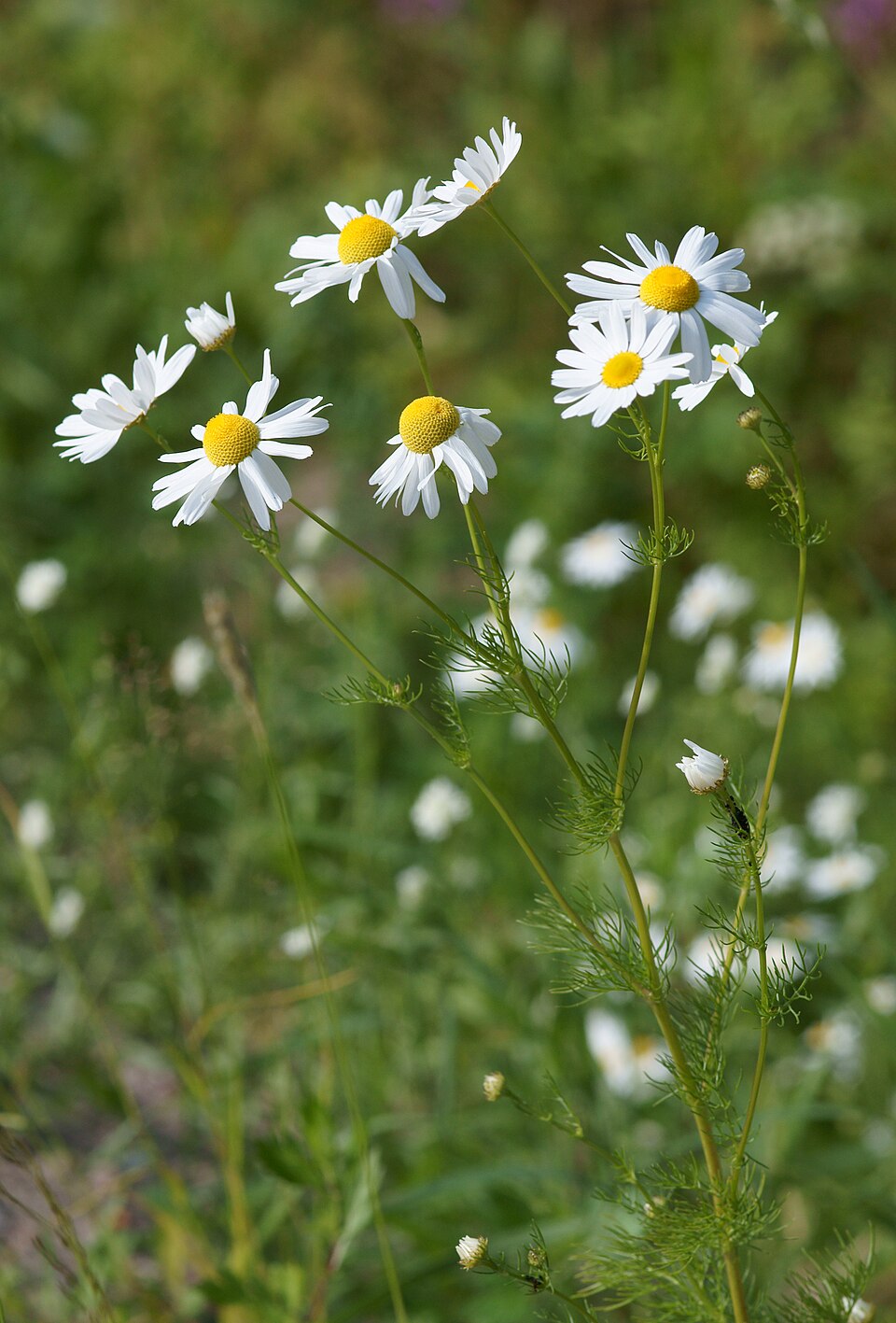
Matricaria chamomilla
German chamomile is a small, sweet-smelling annual with feathery leaves and little daisy-like flowers that have white petals and a domed yellow center.
Safety note
Photo: kallerna, CC BY-SA 3.0, via Wikimedia Commons
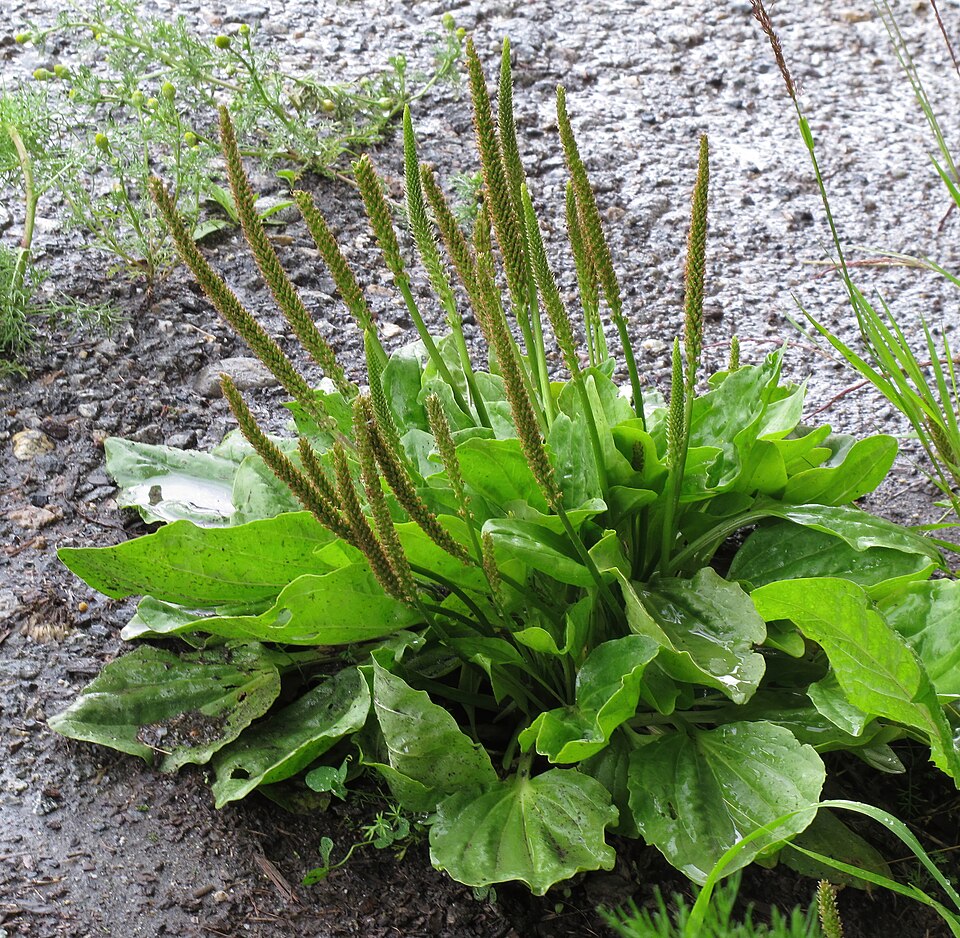
Photo: Robert Flogaus-Faust, CC BY 4.0, via Wikimedia Commons


