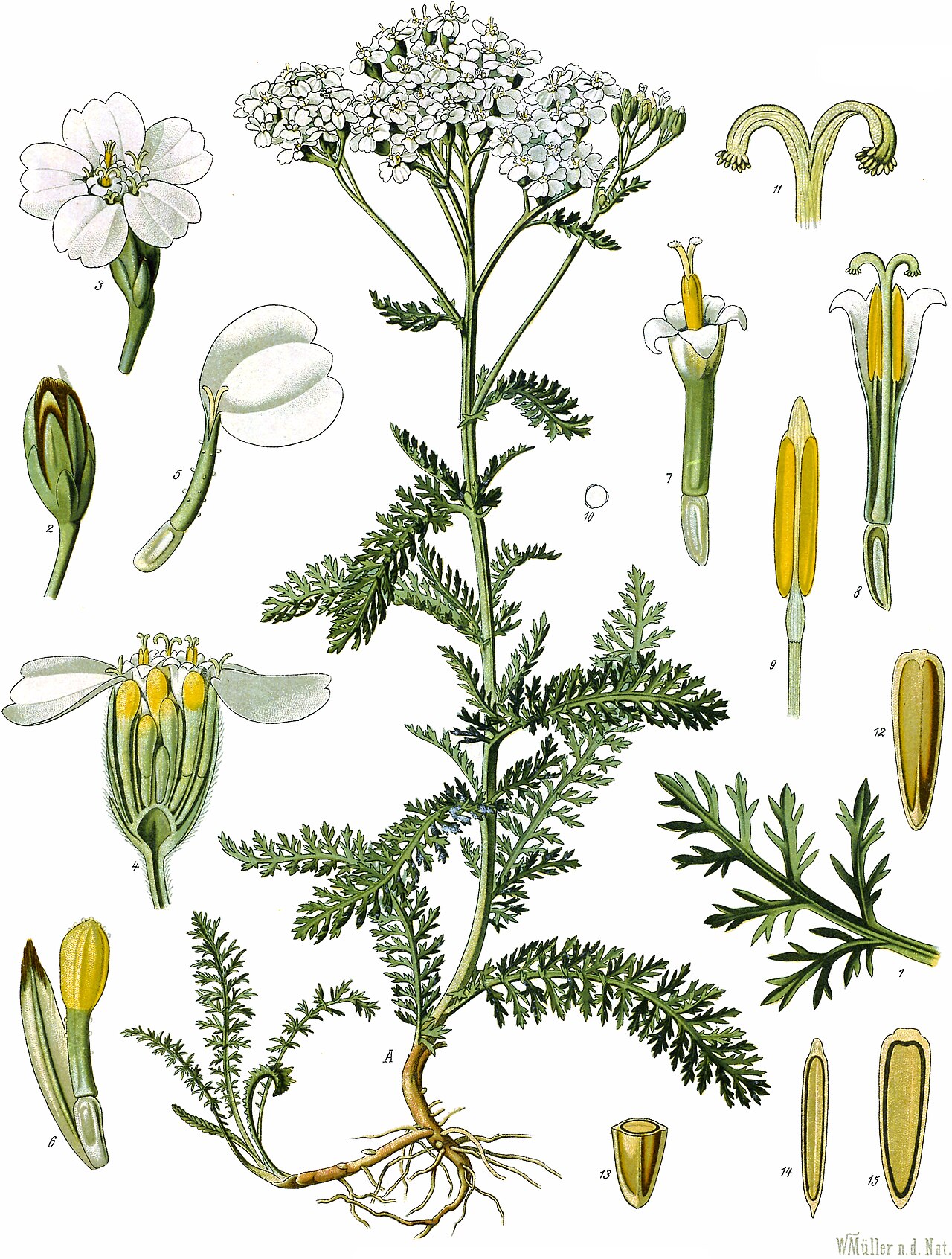
Yarrow is a tough, sun-loving wildflower with soft, feathery leaves and flat-topped clusters of tiny white (sometimes pink) flowers. It grows across North America, in every U.S. state and Canadian province, along roadsides and in fields, meadows, and vacant lots [3]. Some North American yarrow is native and some was introduced from Europe. The two forms interbreed and are very hard to tell apart [3][5].
People have used yarrow for a very long time. Food and medicine uses date back at least to 1200 BC [1]. Today its best-supported role is a traditional one. European regulators accept it as a traditional herbal medicine for mild digestive complaints, loss of appetite, minor menstrual cramps, and small superficial wounds. That acceptance rests on long use, not on strong clinical trials [4][6].
Quick facts
Specimen · Asteraceae
Botanical name
Achillea millefolium L.
Family
Asteraceae (daisy / aster family)
Other names
common yarrow, milfoil, thousand-leaf, soldier's woundwort, nosebleed plant, western yarrow
❦
Names
Common names: yarrow, common yarrow, milfoil, thousand-leaf, soldier's woundwort, nosebleed plant, western yarrow [1][2][3]
Family: Asteraceae, the daisy family. Ragweed, chamomile, chrysanthemum, and sunflower are in the same family. [1]
Where the name comes from:Achillea refers to the Greek hero Achilles, who in legend carried the plant into battle to treat wounds. Millefolium means "thousand leaves," after its finely divided, feathery foliage. [1][2]
❦
Traditional uses
This section describes how people have used yarrow historically. It does not show that these uses work. See the next section for the evidence.
Wounds and bleeding: yarrow's oldest reputation is as a battlefield wound herb, which gave it names like "soldier's woundwort" and "nosebleed plant." Fresh leaves have been applied to wounds [1].
Digestion and appetite: it was used as a "strengthening bitter tonic" and astringent [1]. The EU's traditional-use monograph lists temporary loss of appetite and mild spasmodic digestive complaints such as bloating and gas [4][6].
Menstrual cramps and bleeding: the EU monograph lists minor menstrual cramps [4]. In China, fresh and dried yarrow has been used to ease heavy menstrual bleeding [1].
Native American uses: Native American peoples used yarrow to break fevers, soothe rashes, and treat bleeding and stomach aches [2].
Other folk uses: relieving toothache with fresh leaves, as a tea and salad green, and as a cosmetic cleanser [1].
❦
What the evidence says
Bottom line: the evidence is weak. There is plenty of lab and animal research, but only a few small clinical trials in people. No large, independent trials confirm any use. Drugs.com's professional monograph summarizes it simply: "Clinical studies are limited" [1]. The European Medicines Agency approves yarrow only for traditional use, which means "there is insufficient evidence from clinical trials" but the effects are considered plausible after at least 30 years of safe use [4].
What has been studied:
Use
What was found
Strength
Lab and animal studies
Anti-inflammatory, antioxidant, antimicrobial, antispasmodic, and anti-ulcer effects in test tubes and animals [4][9][10]
Preliminary. Lab results often don't carry over to people.
Menstrual pain (primary dysmenorrhea)
A double-blind trial in Iranian university students compared yarrow tea bags with placebo for 3 days per cycle over 2 cycles. The yarrow group reported a larger drop in pain [11]
One small trial. Promising but unconfirmed.
Mouth sores from chemotherapy (oral mucositis)
In a trial of 56 cancer patients, adding a yarrow distillate to the usual mouthwash for 14 days was linked to better healing [12]
One small trial.
Multiple sclerosis (add-on therapy)
In a one-year trial of 75 people, a yarrow extract added to usual care was linked to fewer relapses and better scores on some tests [13]
One small trial. Not a reason to change MS treatment.
Vaginal yeast infection
A yarrow cream improved itching, but it cleared infection less often than the standard drug clotrimazole (53% vs 77%) [1]
It did not beat standard treatment.
Episiotomy wound healing
A topical yarrow ointment was linked to less pain, redness, and swelling [1]
One small trial.
What we can't say: there is no good evidence that yarrow stops serious bleeding, treats infections, lowers blood pressure in people, or treats cancer. Lab findings in those areas have not been shown in humans [1][10].
❦
How it’s used / prepared
This is general, traditional information, not a recommendation or a dose for you. Talk with a health professional before using yarrow for a health purpose.
Parts used: the above-ground parts (herb) or the flower heads, usually dried [1][4].
Tea (infusion): the most common form. The EU traditional-use monograph describes infusions made by pouring boiling water over a small amount (a few grams) of cut, dried herb [6]. For digestive complaints, the monograph describes taking it between meals [6].
Tincture and liquid extracts: the monograph also covers alcohol-based tinctures and extracts [6]. These contain alcohol [6].
On the skin: for small superficial wounds, the monograph describes a cooled infusion applied on a soaked dressing (compress) [6]. Seek medical care if a wound shows signs of infection [6].
As food: the leaves and flowers are bitter, but in moderation they have been eaten raw or cooked and used in teas, bitters, and liqueurs [2].
When to stop and get help: in the EU guidance, if digestive symptoms last more than 2 weeks, or cramps or wounds last more than 1 week or get worse, see a doctor [4][6].
Buying vs. foraging: buying dried yarrow from a reputable herb supplier avoids the look-alike risk entirely. If you forage, avoid roadsides and sprayed areas.
❦
How to identify
Learn yarrow with an experienced person or a local extension office before you harvest it. Check every feature below.
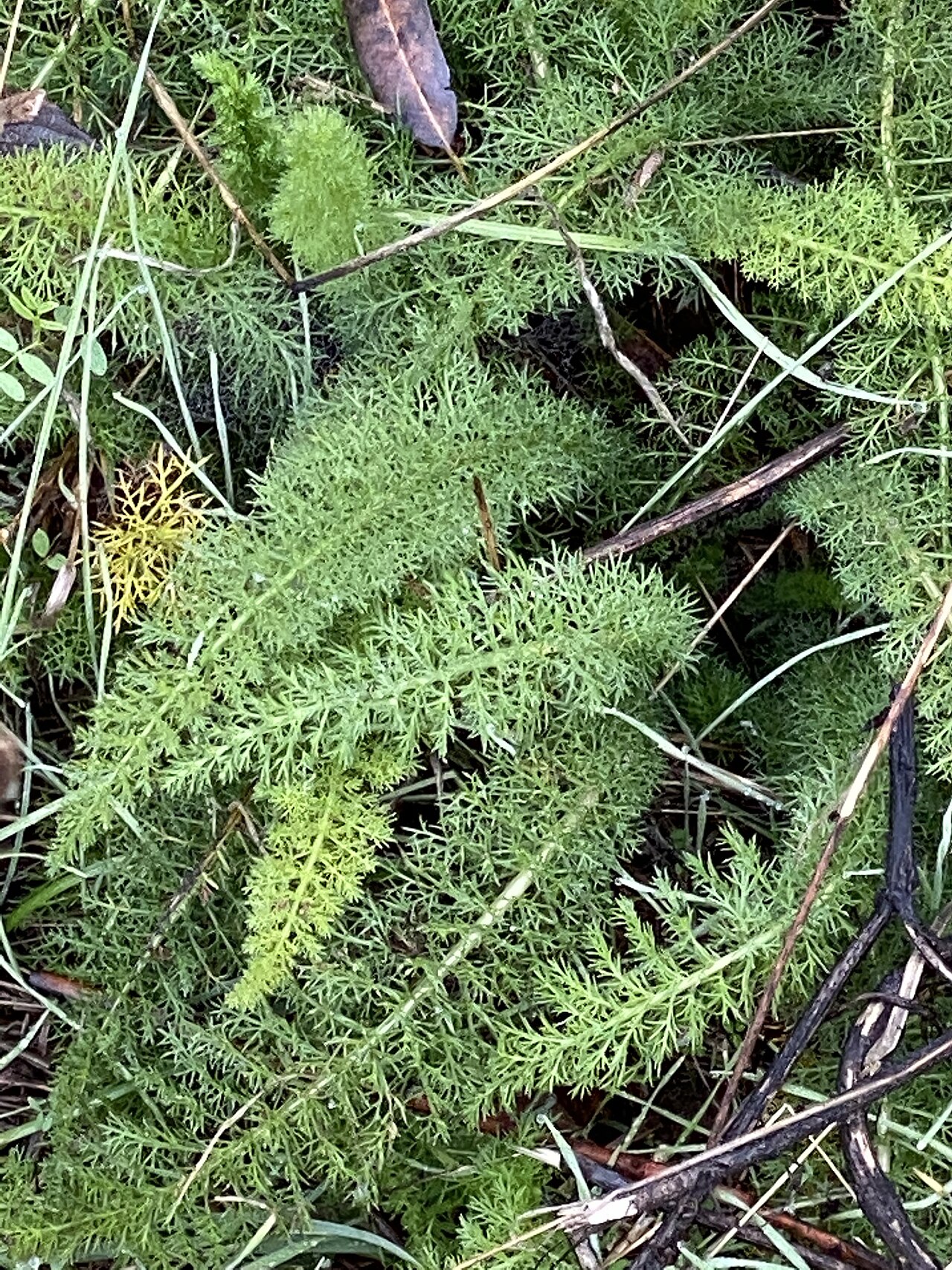
Leaves: soft, narrow, and finely divided into many tiny segments, so they look feathery or fern-like. They grow up to about 6 inches long and about 1 inch wide and get smaller toward the top of the stem. They are often finely hairy and grow in a low rosette plus alternate leaves up the stem [2][5].
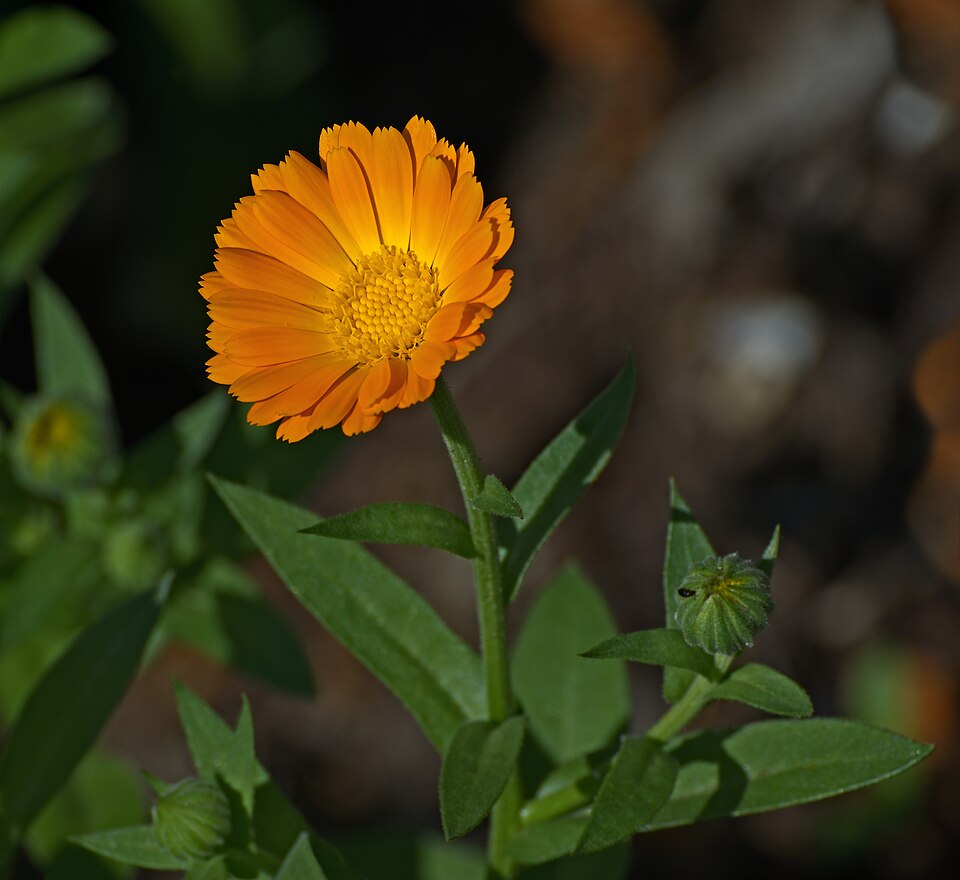
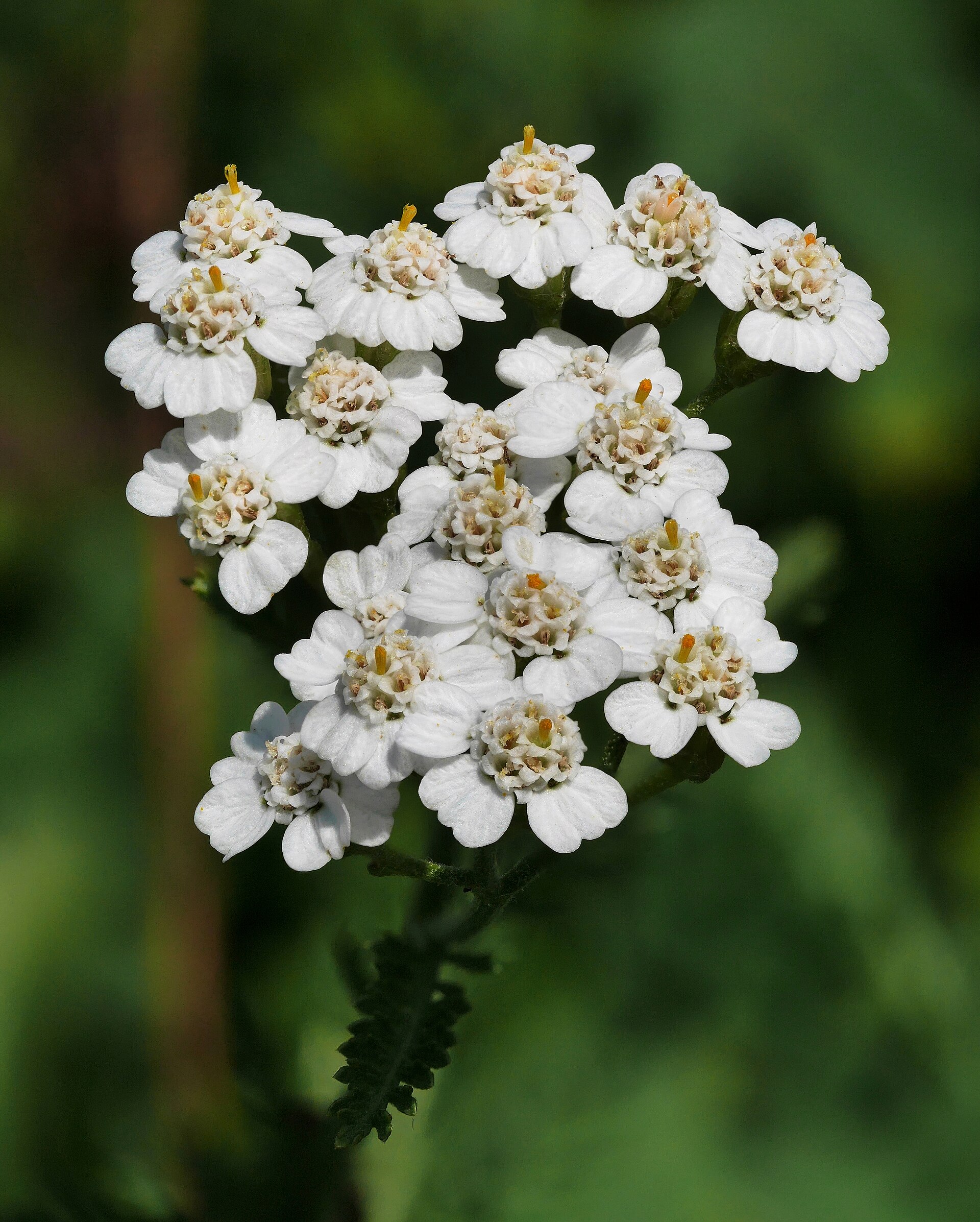
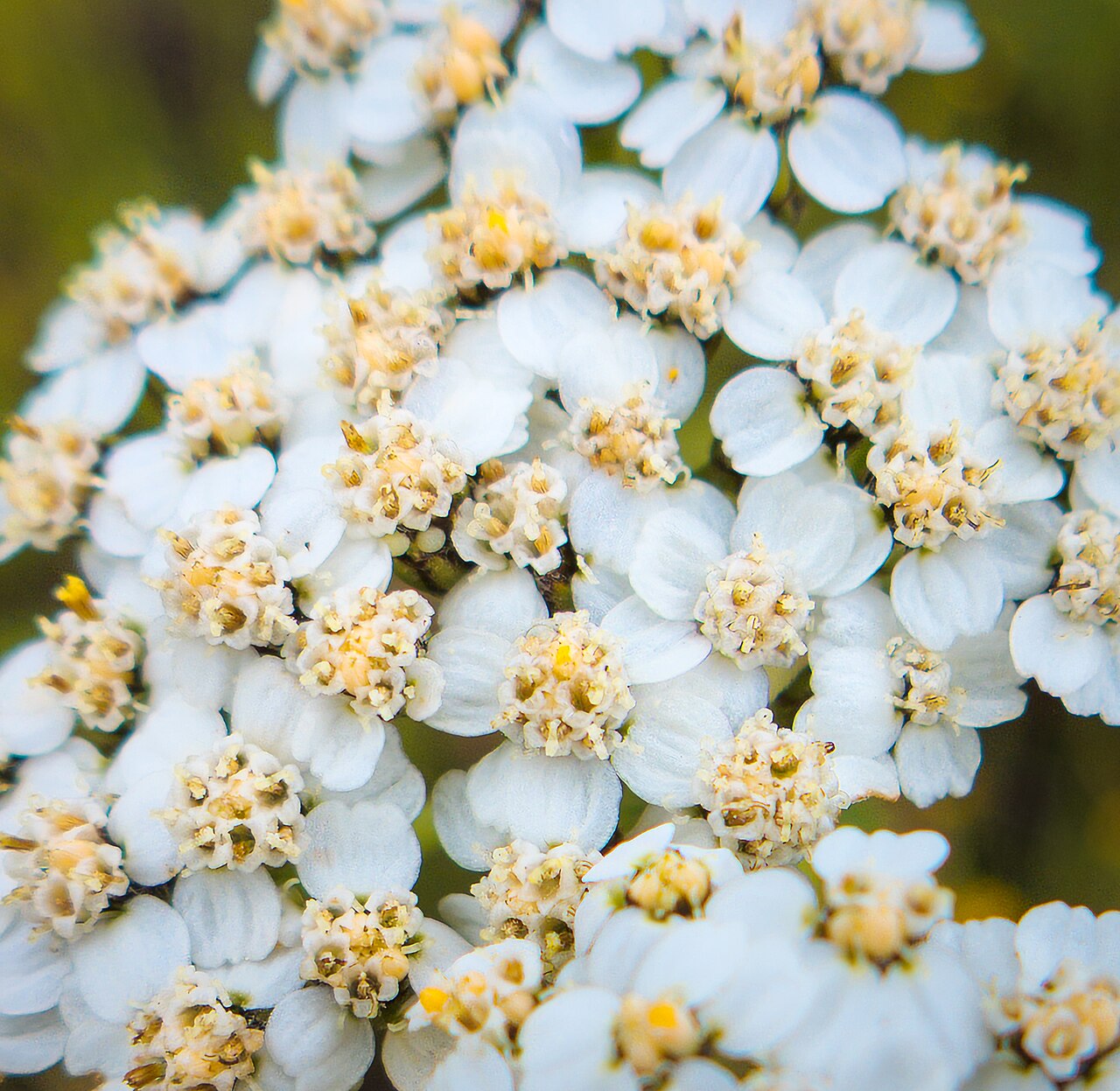
Flowers: flat-topped clusters about 2–4 inches across. Each "flower" is really a tiny head about ¼ inch wide, with usually 4–6 white to pink "petals" (ray flowers) that are notched at the tips and a cream to pale-yellow center [5]. Garden varieties come in red, yellow, orange, and other colors [2].
Stems: green, aromatic, and usually hairy. The plant stands upright, about 1–3 feet tall [2][5].
Smell: the crushed leaves have a strong, spicy aroma [2]. Poison hemlock smells foul or musty instead [14][15].
Habitat: dry, sunny, open places such as fields, prairies, roadsides, open woods, and vacant lots. It does not tolerate deep shade [3][5].
Season: it flowers from about June to September, varying by region [2][5]. The dried seed heads can last into winter [5].
Range: throughout the U.S. and Canada and into Mexico [3].
If any feature doesn't match, or you can't check all of them, leave the plant alone. Some of these look-alikes can kill an adult in small amounts, and a few can also hurt your skin.
The plants most often confused with yarrow are in the carrot family (Apiaceae). Their flowers grow in umbels, clusters where all the small flower stalks spread from one point like the ribs of an umbrella. Yarrow's clusters branch more irregularly [5][14].
Poison hemlock (Conium maculatum): deadly
Height: much taller than yarrow, about 6–10 feet [14]. If it's over your head, it isn't yarrow.
Stem: smooth and hairless, hollow, with purple or reddish spots or streaks[7][14][15]. Yarrow's stem is green and usually hairy.
Leaves: larger, triangular overall, and shaped like parsley (broader leaflets), up to 18 inches long [7][14]. Yarrow's leaves are narrow, very finely divided, and not triangular [7].
Flowers: white umbrella-shaped clusters (umbels) of 5-petaled flowers [14].
Toxicity: all parts are highly toxic and can be fatal. People with sensitive skin may also react to handling it [14]. Wear gloves and long sleeves if you have to walk through it [7].
Water hemlock (Cicuta maculata, and Cicuta douglasii in the Northwest): deadly; often called the most toxic plant in North America[8][17]
Habitat: wet places such as marshes, ditches, stream and pond banks, and wet meadows [8][17].
Stem: smooth and hairless, often with purple stripes or mottling. The base is swollen and has chambers (cross-walls) inside when sliced lengthwise[17][18].
Leaves: divided into separate, toothed, lance-shaped leaflets that look very different from yarrow's feathery leaves. The main veins of each leaflet end in the notches between the teeth rather than at the tips, a feature that sets it apart from harmless relatives [17][18].
Daisy-family (Asteraceae) allergy: don't use yarrow if you are allergic to it or to related plants such as ragweed, chamomile, chrysanthemum, feverfew, or sunflower [1][4][6].
Skin reactions: contact dermatitis is the most commonly reported side effect [1]. Allergic skin reactions are also listed in the EU monograph [6]. Wear gloves when handling the plant if your skin is sensitive [2].
Pregnancy: avoid it. Yarrow contains small amounts of thujone, which is considered capable of causing miscarriage [1]. EU regulators say safety in pregnancy hasn't been established and use is not recommended [6].
Breastfeeding: safety is not established, and use is not recommended [1][6]. We did not find a dedicated yarrow entry in the NIH LactMed database.
Children: the EU guidance does not recommend use under age 12 because of a lack of data [4][6].
Medication interactions: none are well documented in people [1][6]. Drugs.com notes a possible interaction with diuretic ("water pill") medicines [1]. A 2023 review raises possible effects on liver drug-metabolizing (CYP450) enzymes, mainly from lab data [10]. If you take any prescription medicine, especially one where small changes matter, ask your pharmacist first. We did not find reliable evidence for a yarrow–blood-thinner interaction, so we don't make that claim.
Large amounts: a case report describes anticholinergic side effects in someone who drank 5 cups of yarrow tea a day for a week [1].
Thujone in products: commercial preparations are expected to be thujone-free [1].
Pets: NC State Extension lists yarrow as a problem plant for cats, dogs, and horses [2].
Look-alike poisoning: the biggest danger with wild yarrow is picking the wrong plant. See Look-alikes to avoid.
Not medical advice
This page is for general education only. It is not medical advice and doesn't replace a doctor, pharmacist, or other qualified professional. Herbs can cause allergic reactions and interact with medicines. Check with a health professional before using any herb, especially if you are pregnant or breastfeeding, giving it to a child, taking medication, or managing a health condition. Never eat or use a wild plant unless an expert has confirmed what it is. For a suspected poisoning in the U.S., call Poison Help at 1-800-222-1222 [16]. In Canada, call 1-844-POISON-X (1-844-764-7669), or the Centre antipoison du Québec at 1-800-463-5060 if you are in Québec [20].
Ali SI, Gopalakrishnan B, Venkatesalu V. Pharmacognosy, phytochemistry and pharmacological properties of Achillea millefolium L.: a review. Phytother Res. 2017. https://pubmed.ncbi.nlm.nih.gov/28618131/
Farasati Far B, Behzad G, Khalili H. Achillea millefolium: mechanism of action, pharmacokinetic, clinical drug-drug interactions and tolerability. Heliyon. 2023. https://pubmed.ncbi.nlm.nih.gov/38076118/
Jenabi E, Fereidoony B. Effect of Achillea millefolium on relief of primary dysmenorrhea: a double-blind randomized clinical trial. J Pediatr Adolesc Gynecol. 2015. https://pubmed.ncbi.nlm.nih.gov/26238568/
Miranzadeh S, et al. Effect of adding the herb Achillea millefolium on mouthwash on chemotherapy induced oral mucositis in cancer patients: a double-blind randomized controlled trial. Eur J Oncol Nurs. 2015. https://pubmed.ncbi.nlm.nih.gov/25667123/
Ayoobi F, Moghadam-Ahmadi A, Amiri H, et al. Achillea millefolium is beneficial as an add-on therapy in patients with multiple sclerosis: a randomized placebo-controlled clinical trial. Phytomedicine. 2019. https://pubmed.ncbi.nlm.nih.gov/30599916/
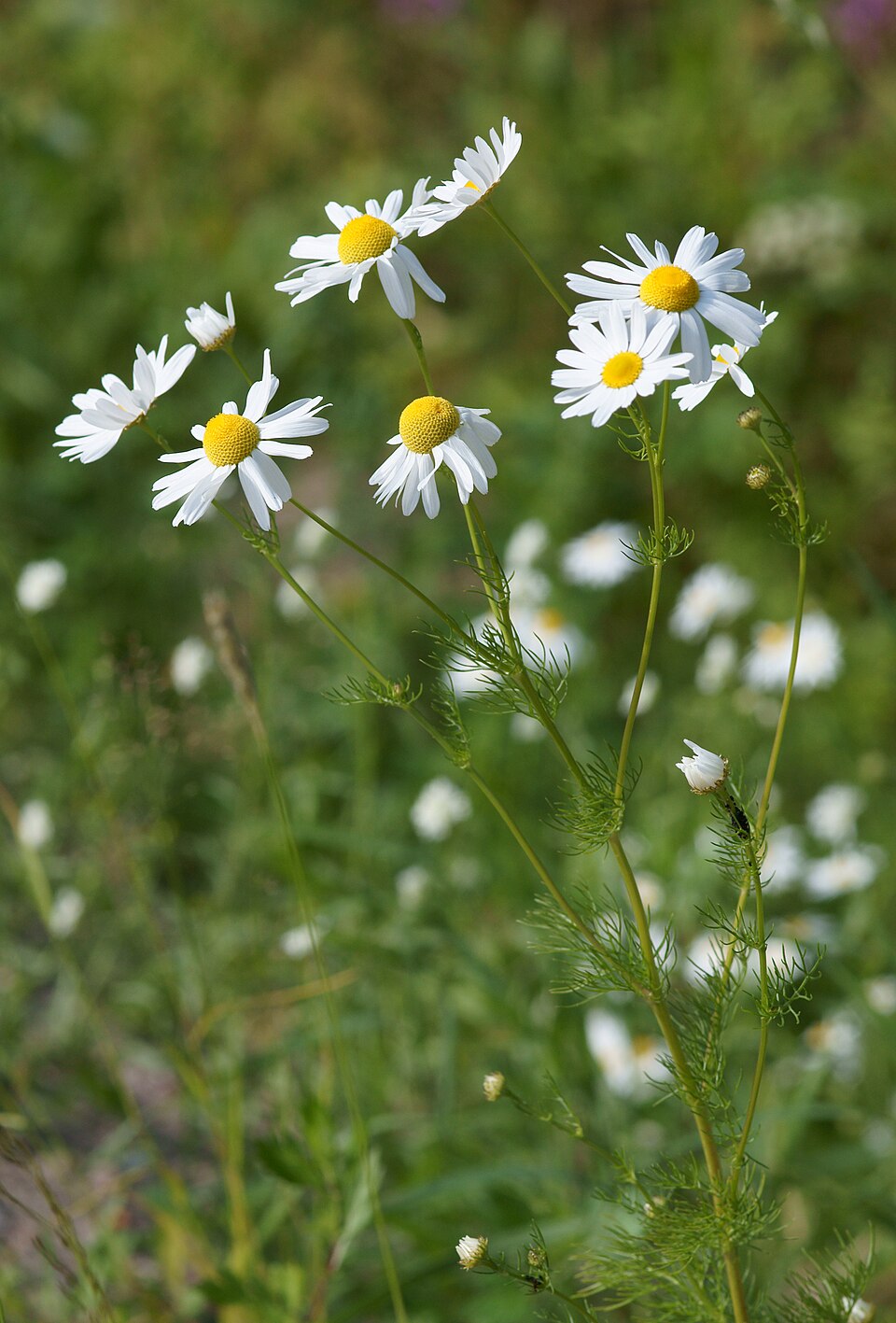
German chamomile is a small, sweet-smelling annual with feathery leaves and little daisy-like flowers that have white petals and a domed yellow center.