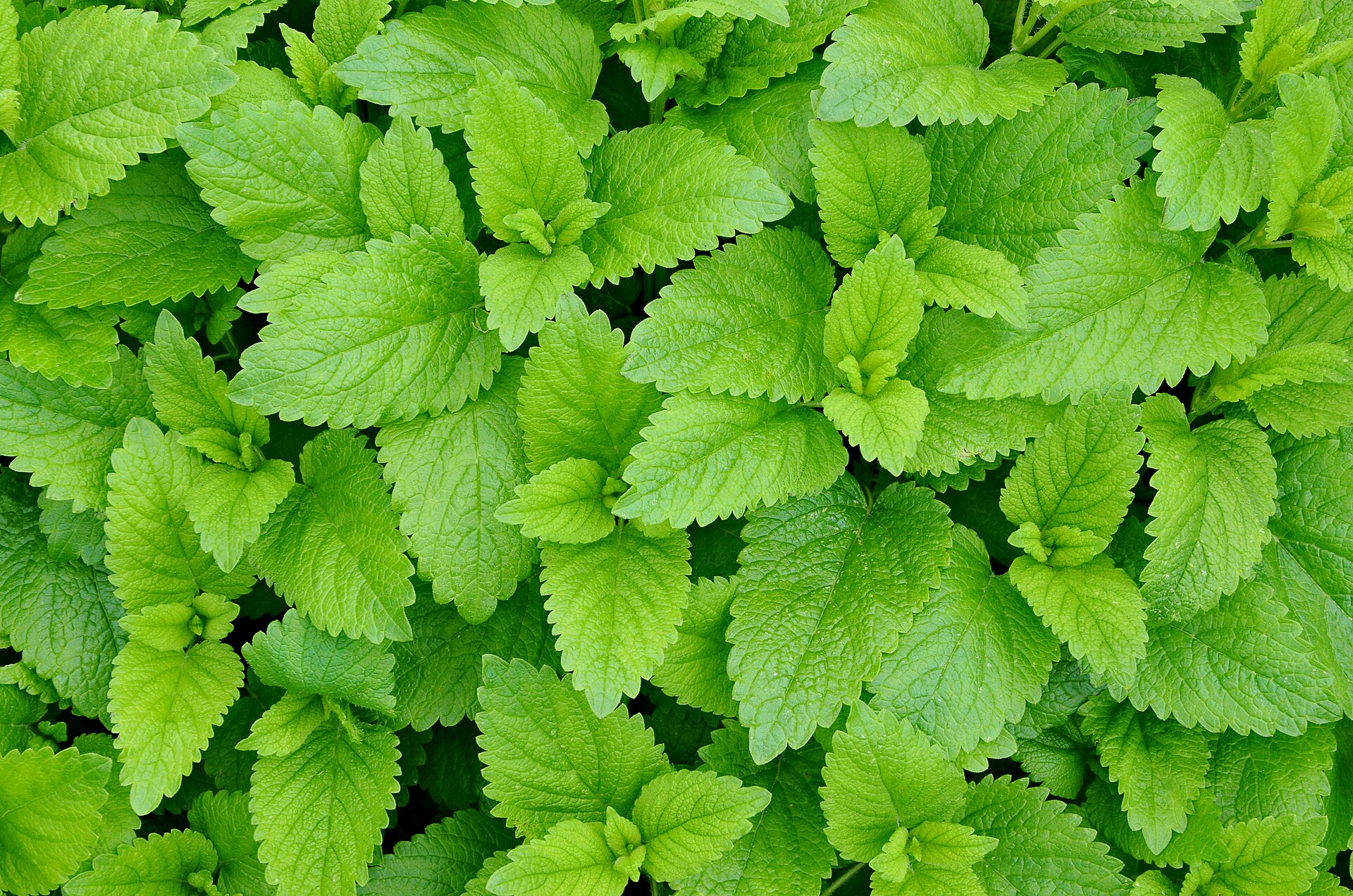
Lemon balm is a bushy, easy-to-grow perennial in the mint family. Its crinkled, heart-shaped leaves smell strongly of lemon when you brush or crush them [4]. It's native to southern Europe through Central Asia and has escaped gardens to grow wild in parts of the United States [1][4].
It's a pleasant tea herb with a long history as a calming remedy. European regulators accept it for mild stress, sleep, and mild digestive upset, but only on the basis of traditional use [3]. The clinical research is small and mixed in quality. A 2021 meta-analysis found possible benefits for anxiety and low mood, but the authors called for caution [5].
Quick facts
Specimen · Lamiaceae
Botanical name
Melissa officinalis L.
Family
Lamiaceae (mint family)
Other names
lemon balm, balm, sweet balm, melissa, balm mint
❦
Names
Common names: lemon balm, balm, sweet balm, melissa [1]. Some research calls it "balm mint" [2].
Where the name comes from:Melissa is Greek for "honeybee," and the flowers are loved by bees. Officinalis means "found in shops," a name given to plants used as medicine [1][4]. "Balm" is short for "balsam" [1].
❦
Traditional uses
This section describes how people have used lemon balm historically. It does not show that these uses work. See the next section for the evidence.
A long history: lemon balm appears in the writings of Pliny and Dioscorides in ancient Rome and Greece, Paracelsus in the 1500s, and the English herbalist John Gerard. Its main historical uses were for gas and digestion, sweating, and fever [1].
Calm and sleep: European regulators recognize lemon balm tea and extracts as a traditional remedy for mild symptoms of mental stress and as a sleep aid [3][6].
Digestion: also traditionally used for mild digestive complaints such as bloating and gas [3][6].
Other folk uses: relaxation, memory, digestion, colds, and insect bites [4].
Food: the leaves and flowers flavor tea, soups, stews, and salads. New leaves have more flavor than older ones [4].
❦
What the evidence says
Bottom line: the evidence is limited and preliminary. There are a handful of small trials, often with design problems, and many test lemon balm combined with other herbs such as valerian. European regulators reviewed a small anxiety and sleep study and found "shortcomings in the design of the study prevented any firm conclusions" [3].
Use
What was found
Strength
Anxiety and low mood
A 2021 meta-analysis (6 trials, 435 people) found lemon balm lowered anxiety and depression scores compared with placebo, without serious side effects. The authors warn the studies were few, very different from each other, and need confirming [5]. Broken down further, people with short-term (acute) depression benefited but those with chronic depression did not, and neither acute nor chronic anxiety on its own showed a clear benefit [1].
Preliminary. The trials are small and very different from each other.
Lab-induced stress
Single doses of lemon balm extract in healthy volunteers changed calmness and alertness depending on the dose. The highest dose actually made mood worse and reduced alertness [1].
Small, short-term experiments
Sleep
Small trials used lemon balm combined with valerian, so lemon balm's own effect is unclear [1]. EU regulators accept a sleep-aid use on traditional grounds only [3].
Weak for lemon balm alone
Cold sores (herpes labialis)
In a trial of 66 people with recurring cold sores, a 1% lemon balm extract cream reduced symptom scores on day 2 compared with placebo [2]. Drugs.com notes a few small placebo-controlled trials with similar results [1].
Small trials
Cholesterol
One 2-month trial in 58 adults with borderline high cholesterol found a modest drop in LDL ("bad") cholesterol with lemon balm leaf powder [1].
A single small trial
Dementia agitation
Small studies of an extract, or of the essential oil applied to the skin, reported less agitation. A later trial in 49 nursing home residents found the essential oil did not reduce agitation overall compared with placebo [1].
Small, mixed
What we can't say: that lemon balm treats anxiety disorders, depression, insomnia, or dementia, or that it can replace prescribed treatment. The research is too small and inconsistent [1][3][5].
❦
How it’s used / prepared
This is general, traditional information, not a recommendation or a dose for you. Talk with a health professional before using lemon balm for a health purpose.
Parts used: the leaves, traditionally harvested before flowering [1].
Tea (infusion): the most common form. The EU traditional-use monograph describes infusions made by pouring boiling water over a small amount (a few grams) of dried leaf [6].
Tinctures and extracts: the monograph also covers alcohol-based tinctures and extracts [6].
On the skin: a 1% lemon balm extract cream has been studied for cold sores [1][2].
Food: fresh leaves in tea, soups, stews, and salads [4].
When to stop and get help: EU guidance says to see a doctor if symptoms last more than 2 weeks or get worse [3][6].
❦
How to identify
Lemon balm is mainly a garden herb, but it can escape and grow wild [4].
Leaves: opposite (in pairs), oval to heart-shaped, 1.5–3.5 inches long and 1–2 inches wide. They are wrinkled, hairy, and coarse, with scalloped or toothed edges [4].
Flowers: tiny two-lipped flowers, creamy white (sometimes yellowish), in clusters of 2–10 where the upper leaves meet the stem. They bloom about June to August, and bees love them [1][4].
Stems:square (four-angled), like other mints, light green and branched. They may be smooth or finely hairy and can get somewhat woody with age [4].
Smell: a clear lemon scent when the leaves are crushed [1][4].
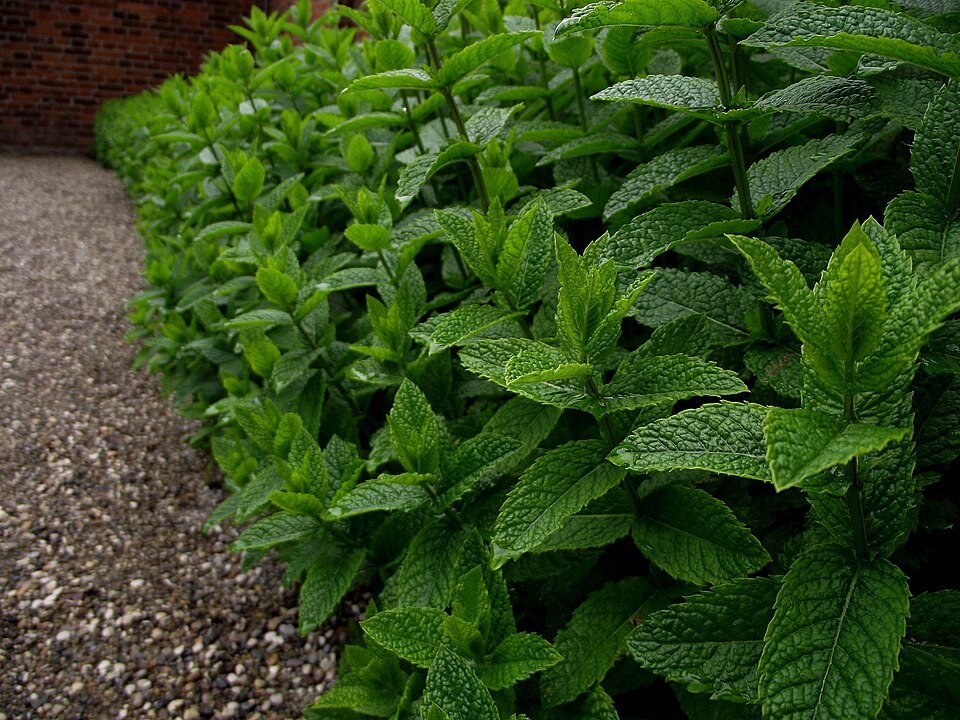
Size and habit: a bushy plant 1.5–2 feet tall. It spreads by seed and underground stems, so many gardeners grow it in a container [4].
Habitat: full sun to part shade and well-drained soil. It tolerates poor soil and, once established, drought. Escaped plants grow along roadsides and in disturbed areas [4].
Buying tips: look for Melissa officinalis on the label, which shouldn't be confused with lemongrass or lemon verbena. U.S. dietary supplements aren't FDA-approved before sale, and contents can differ from the label [7].
❦
Look-alikes to avoid
When in doubt, don't.
If any feature doesn't match, or you can't check all of them, leave the plant alone.
We found no verified source naming a dangerous look-alike for lemon balm. It looks like many other square-stemmed mint-family plants, and its lemon scent is the easiest check [1][4]. One related caution: some mint-family plants are dangerous to make into tea. Pennyroyal, for example, has caused serious poisonings when mistaken for mint (see our peppermint page). Only make tea from a plant you've grown from a labeled start or bought from a reliable source.
❦
Safety and interactions
Generally well tolerated: most clinical trials report no side effects [1]. LactMed notes occasional nausea, vomiting, belly pain, dizziness, and wheezing [7]. When EU regulators assessed it, no side effects had been reported [3].
Allergy: don't use it if you're allergic to lemon balm [6].
Medication interactions: there are no well-documented interactions [1]. The EU monograph says "no data available" [6]. That's a gap in the research, not proof of safety. If you take sedatives or other regular medicines, ask your pharmacist. We didn't find verified evidence for interactions with thyroid medicines or sedatives, so we don't claim them.
Pregnancy: there isn't enough safety information [1]. EU guidance does not recommend medicinal use in pregnancy [6].
Breastfeeding: lemon balm is GRAS as a food flavoring. There are no data on whether it passes into breast milk or on lemon balm alone in nursing mothers or infants. Usual maternal amounts are probably not harmful [7]. EU guidance does not recommend medicinal use while breastfeeding [6]. Its reputation for boosting milk supply rests on weak evidence, mostly from products that combine it with barley malt [7].
Children: EU guidance does not recommend medicinal use under 12 because of a lack of data [3][6]. Lemon balm has been used with other herbs in infants [7]. Ask a pediatrician before giving any herb to a child.
Not medical advice
This page is for general education only. It is not medical advice and doesn't replace a doctor, pharmacist, or other qualified professional. Herbs can cause allergic reactions and interact with medicines. Check with a health professional before using any herb, especially if you are pregnant or breastfeeding, giving it to a child, taking medication, or managing a health condition. Never eat or use a wild plant unless an expert has confirmed what it is. For a suspected poisoning in the U.S., call Poison Help at 1-800-222-1222 [8]. In Canada, call 1-844-POISON-X (1-844-764-7669), or the Centre antipoison du Québec at 1-800-463-5060 if you are in Québec [9].
Koytchev R, Alken RG, et al. Balm mint extract (Lo-701) for topical treatment of recurring herpes labialis. Phytomedicine. 1999. https://pubmed.ncbi.nlm.nih.gov/10589440/
Ghazizadeh J, Sadigh-Eteghad S, et al. The effects of lemon balm (Melissa officinalis L.) on depression and anxiety in clinical trials: a systematic review and meta-analysis. Phytother Res. 2021. https://pubmed.ncbi.nlm.nih.gov/34449930/
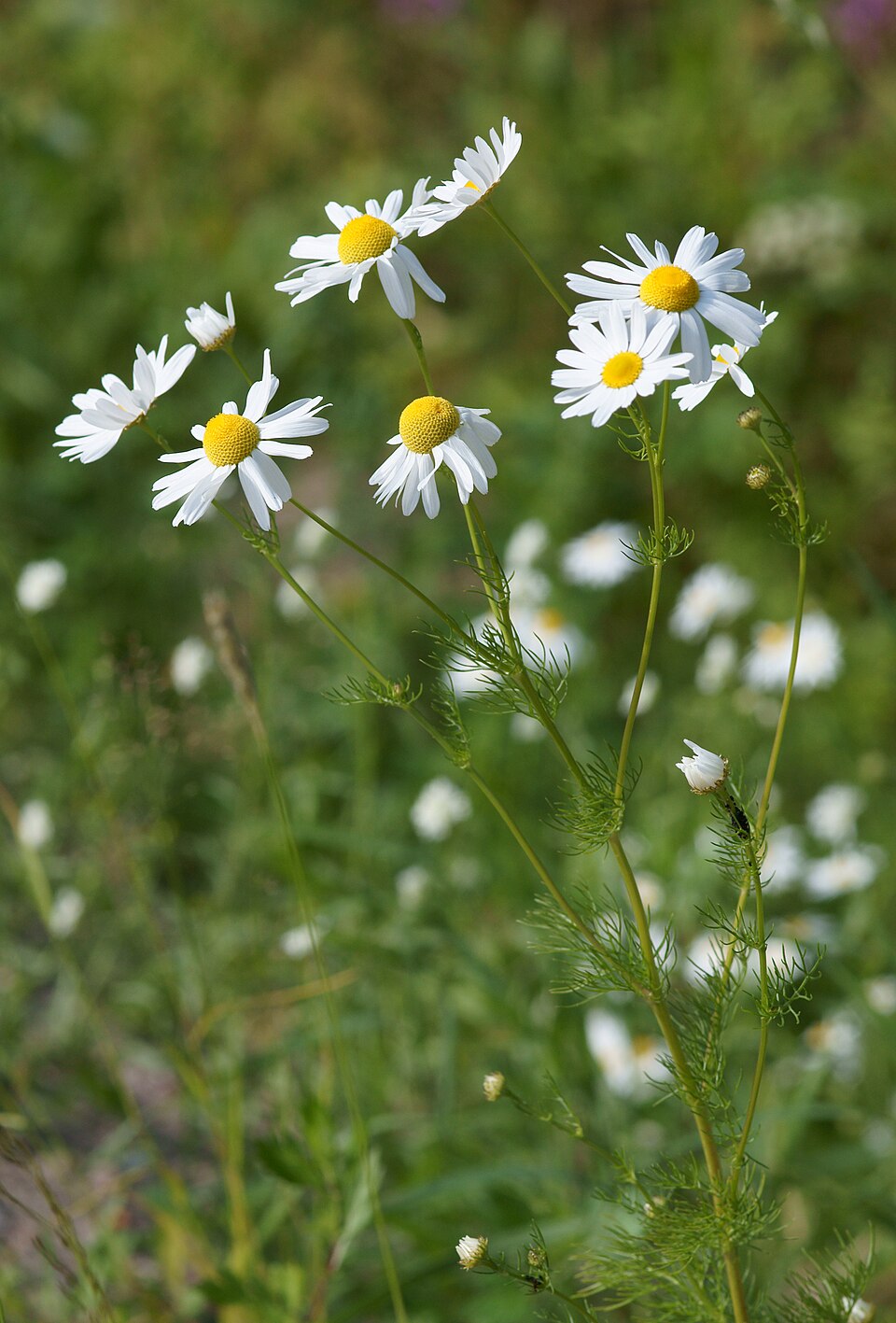
German chamomile is a small, sweet-smelling annual with feathery leaves and little daisy-like flowers that have white petals and a domed yellow center.